Fisherman's Bastion
The bastion we know today, which was never a fortress
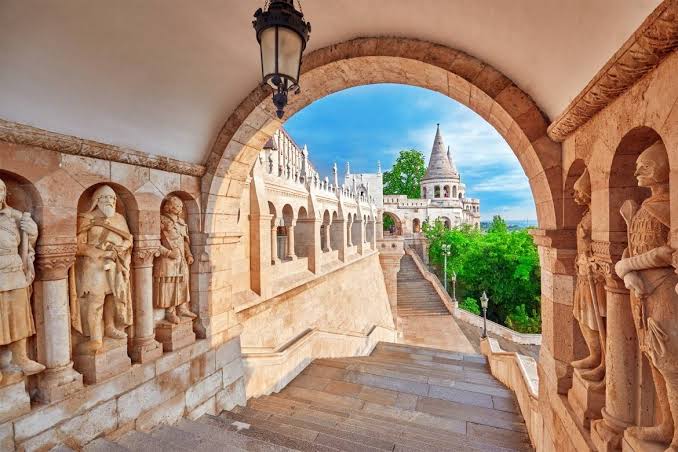
There are few buildings in Hungary that so many people believe to be medieval as the Fisherman’s Bastion. Built in the Neo-Romanesque style, yet evoking a Gothic atmosphere in many of its details—the snow-white towers, the lace-like parapets, the arched arcades, and the old castle walls—it gives the impression that it has stood here for centuries, guarding Buda Castle and the Danube. Most visitors take it for granted that this, too, was part of the medieval fortification system.
Yet the complex of buildings we know today was almost entirely built at the end of the 19th century. By the time it was completed, Buda Castle’s military role had long since ceased; the city walls no longer kept the enemy at bay but had become historical monuments. The Fisherman’s Bastion, therefore, is not a product of war, but of peace.
Architecture That Tells a Story
When Frigyes Schulek began the restoration of Matthias Church at the end of the 19th century, he quickly realized that the church’s surroundings were no longer befitting the building’s historical significance. The castle walls stretching out in front of it were outdated and dilapidated, and behind them, the monumental sense of space that one of the country’s most important historic monuments deserved was not evident.
Read more
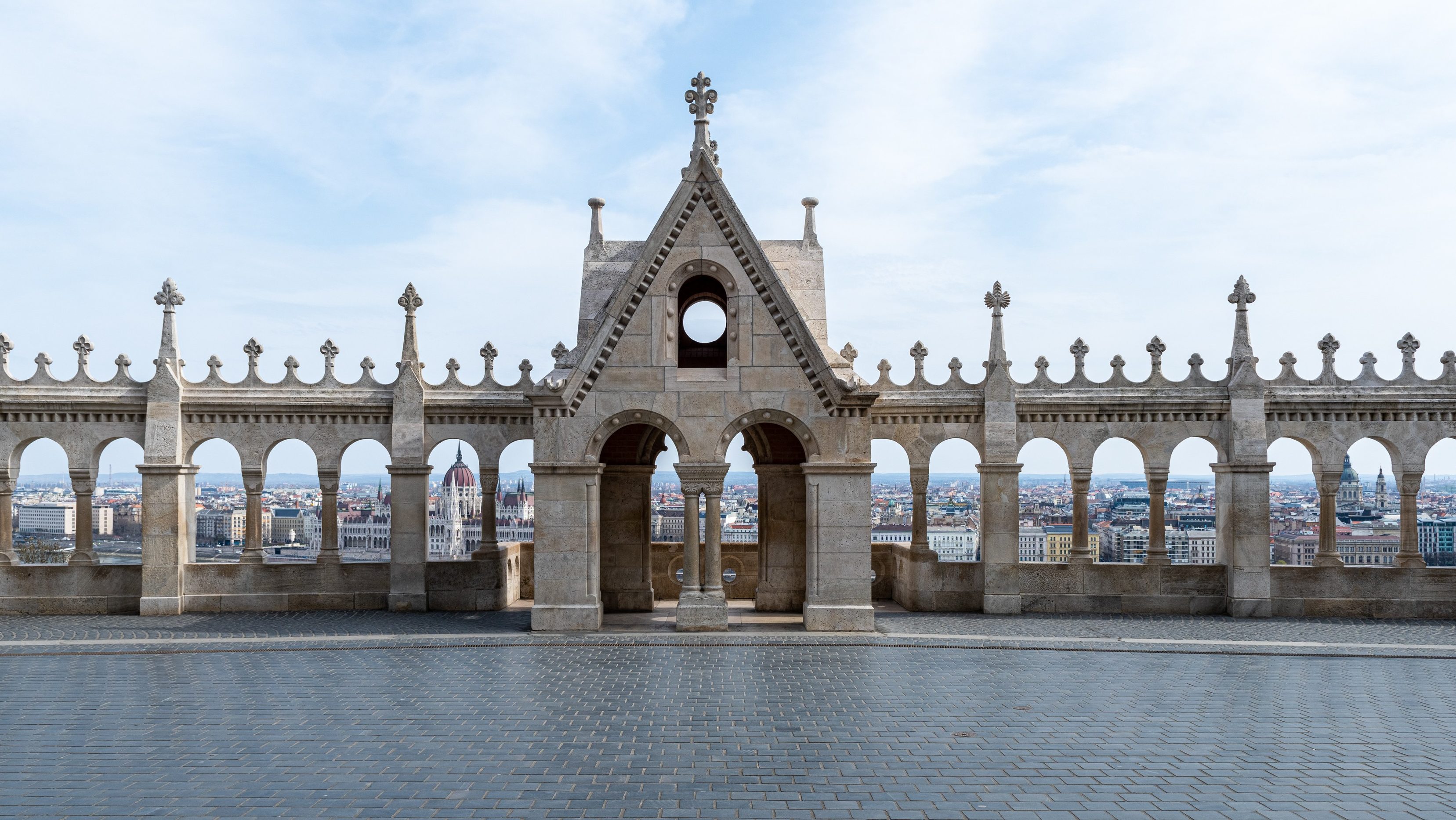
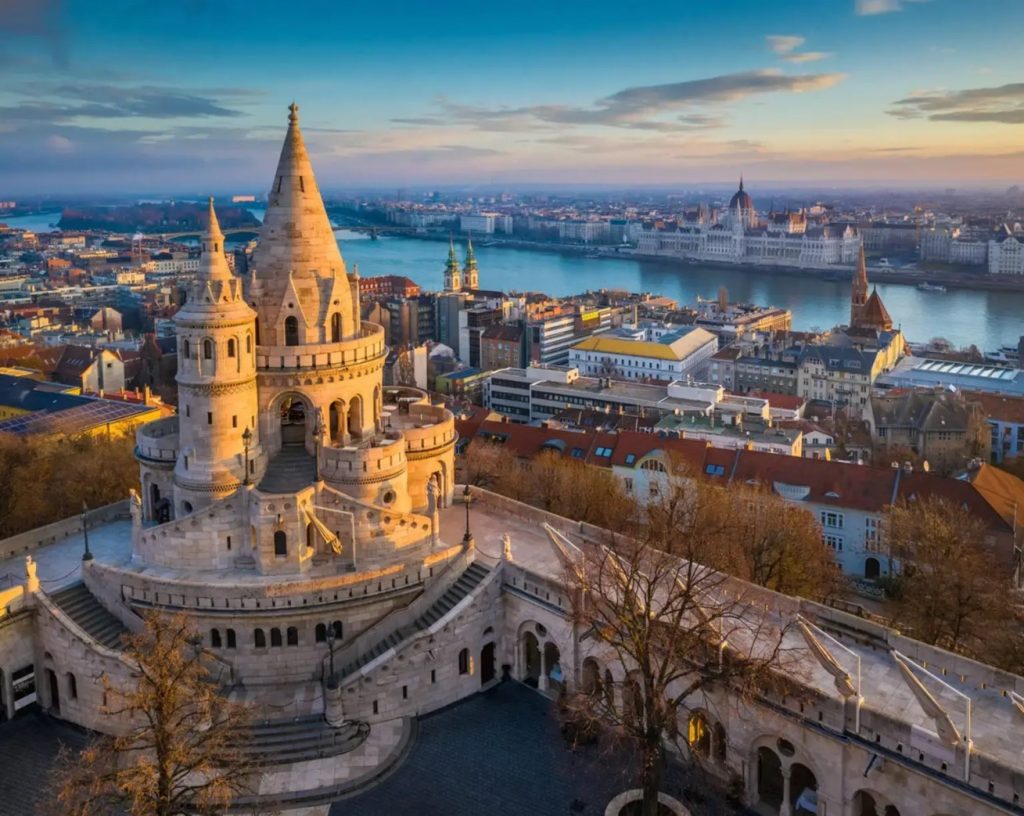
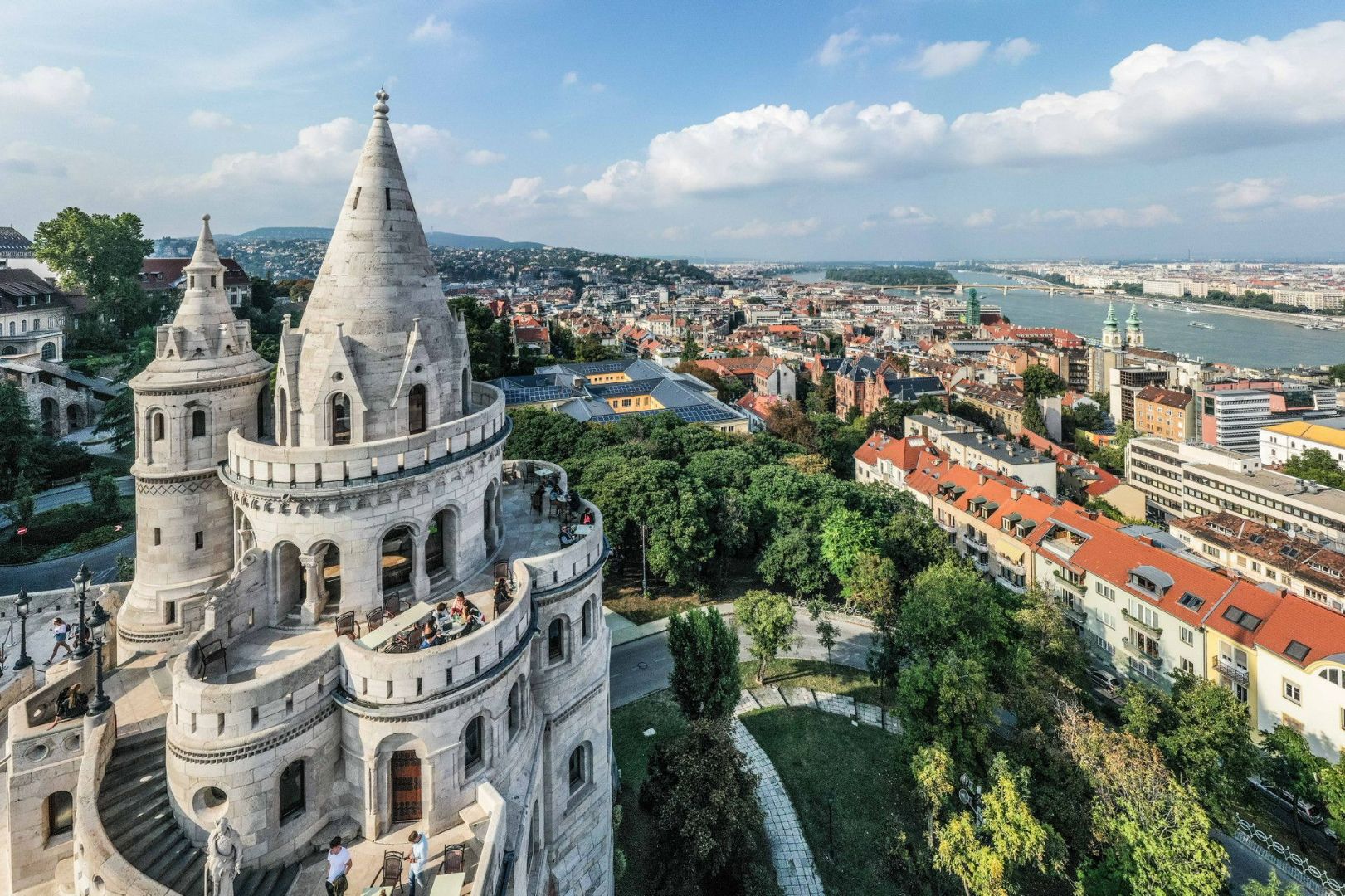
However, Schulek did not simply want to build more beautiful walls. He envisioned the site as a vast open-air stage, where the protagonist is not the Fisherman’s Bastion itself, but Budapest. He designed the building so that visitors could gradually discover the city. As one walks along the terraces, new vistas constantly unfold: first the dome of the Parliament, then the curve of the Danube, and finally the church spires and boulevards of Pest take center stage. The panorama is thus not a single image, but a series of successive scenes.
The cloister-like design also plays an important role in this. The rows of arcades connecting the towers evoke the world of medieval monasteries, where the cloister was a space for contemplation and reflection. Schulek transposed this feeling into an urban panoramic building.
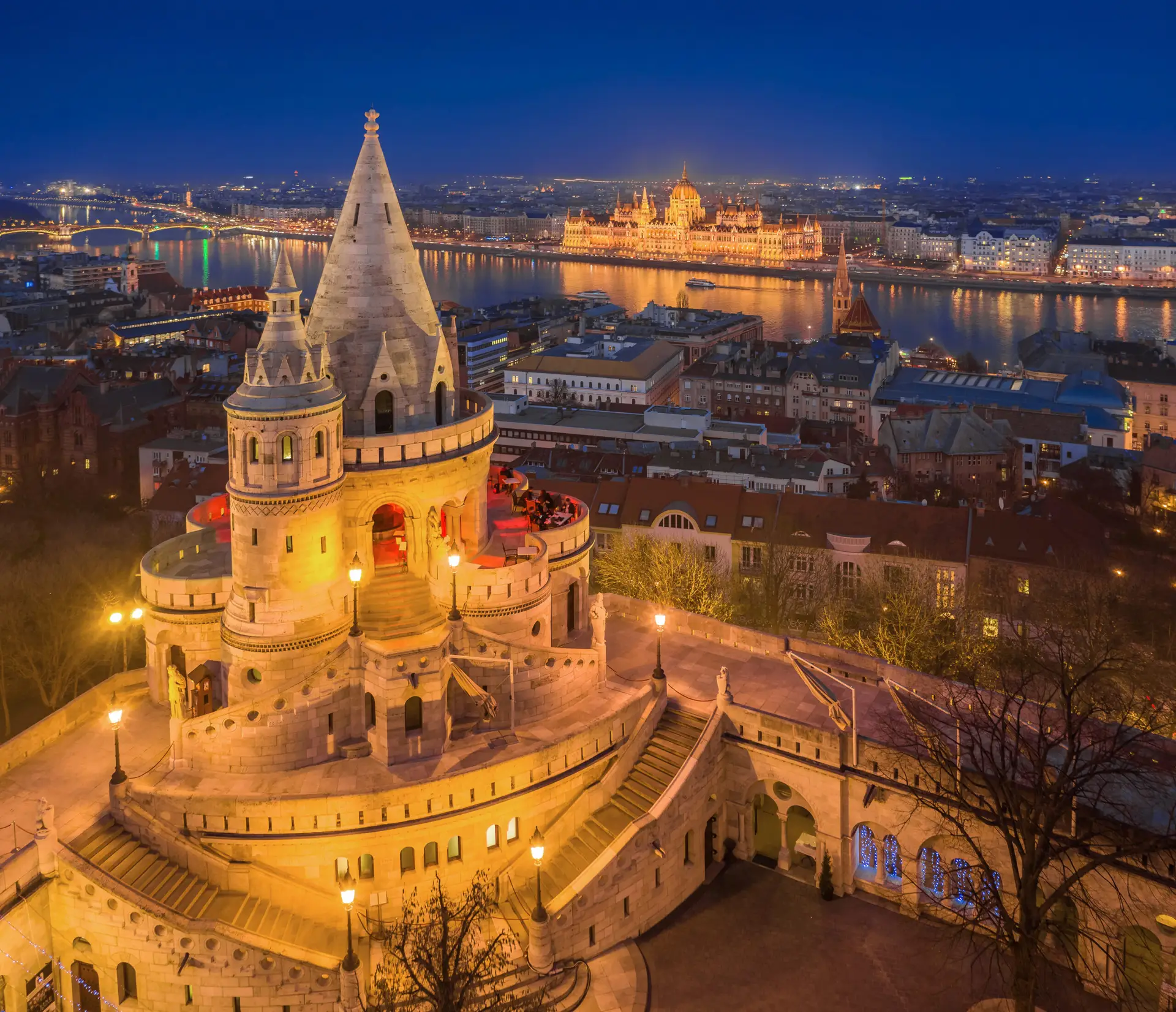
The use of light-colored limestone was also a deliberate choice. The goal was for the Fisherman’s Bastion to appear not as a massive fortress, but as a light, almost floating structure whose character changes with the time of day.
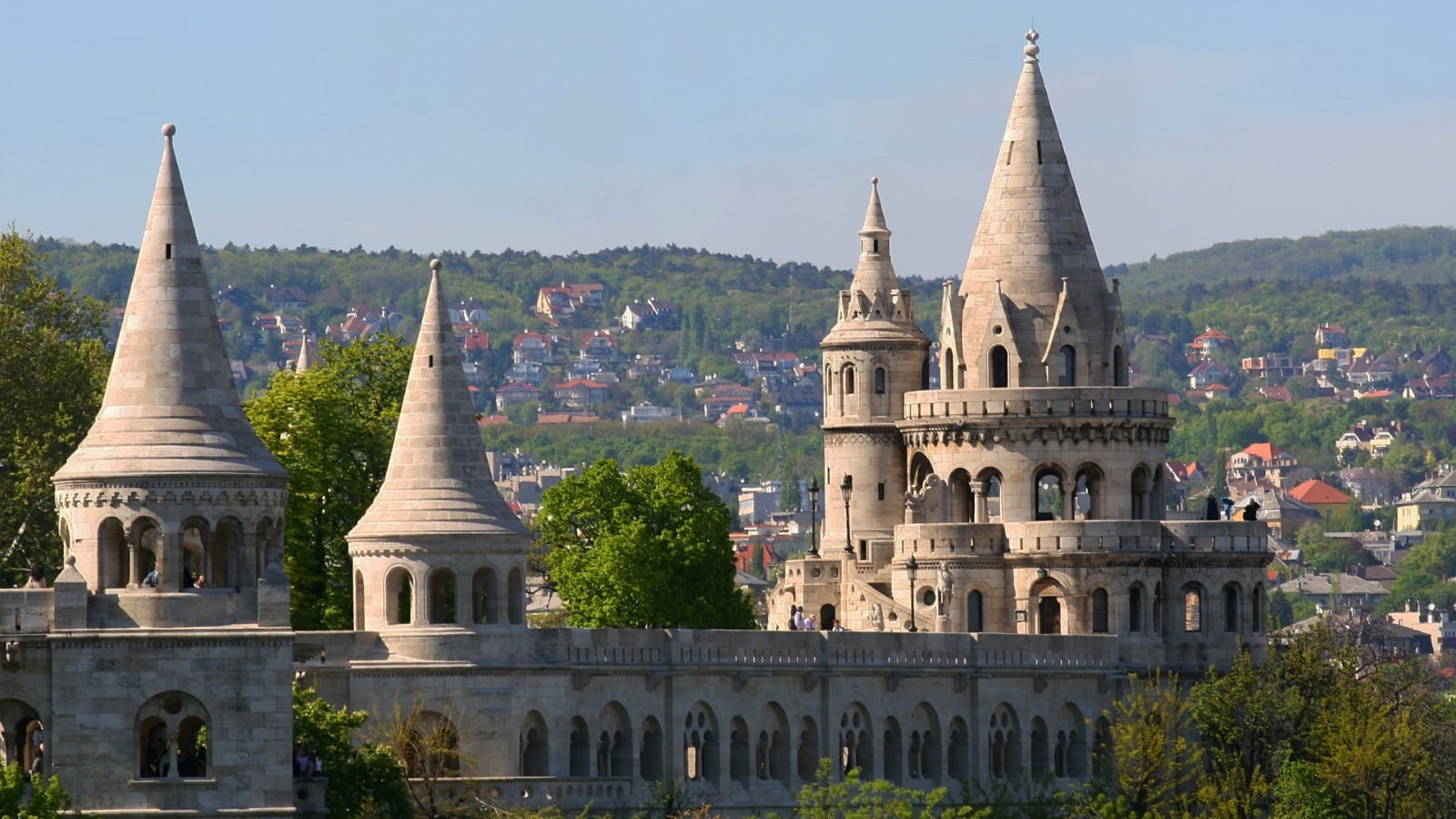
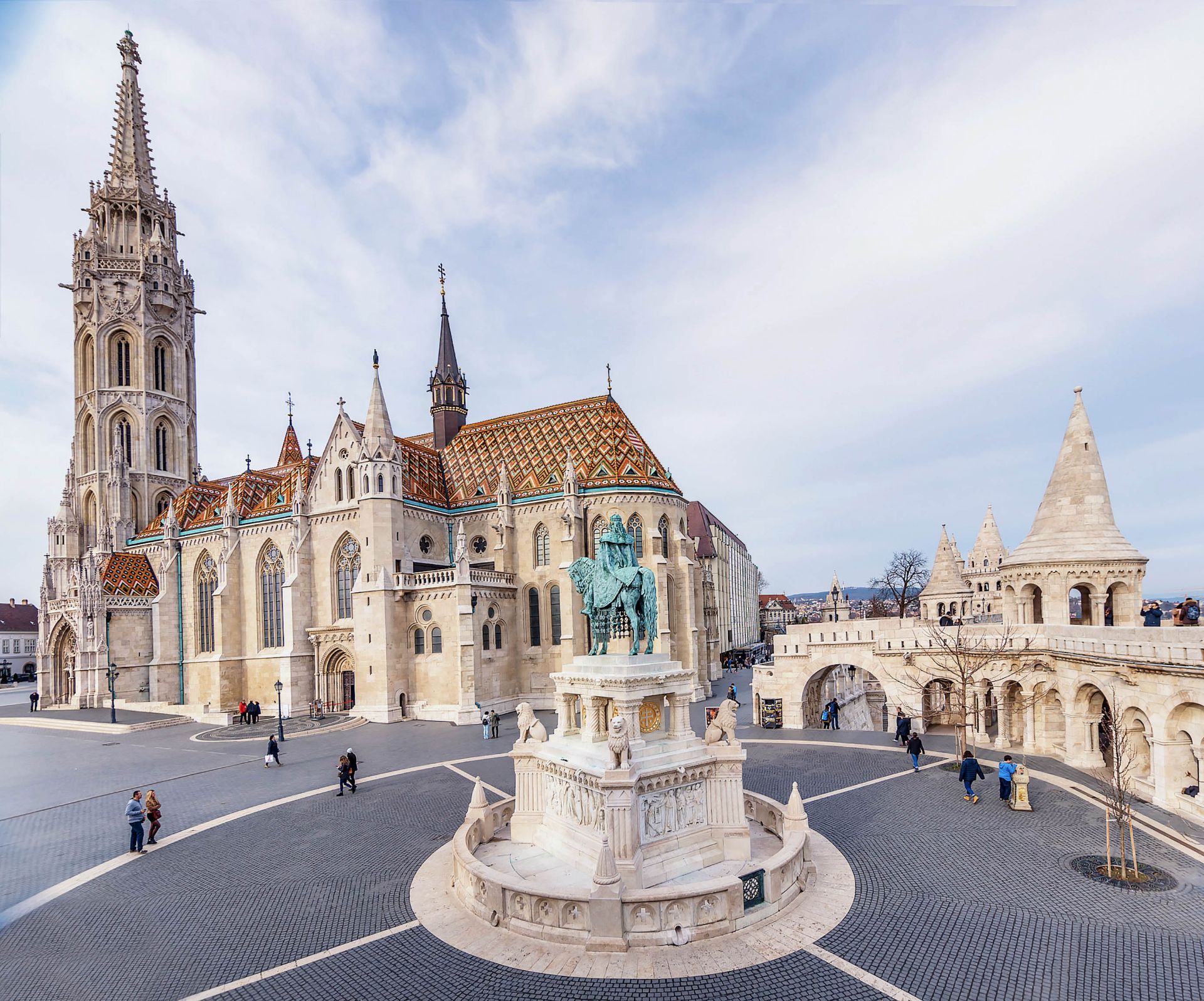
The seven towers of the Fisherman’s Bastion symbolize the seven Hungarian chieftains who led the conquest of the Carpathian Basin. At the time of the millennium, this was an important symbol of the thousand-year history of the Hungarian state. Schulek originally planned to include eight monumental statues of the leaders on the northern section of the bastion, but in the end, only the figures of Álmos and Előd were realized.
Although it appears uniform at first glance, there are almost no two completely identical towers on the Fisherman’s Bastion. Their varying heights, floor plans, and proportions are designed to ensure that each offers a different perspective and experience. Moreover, the largest tower was built on the site of the former Signal Tower, giving it outstanding historical significance.
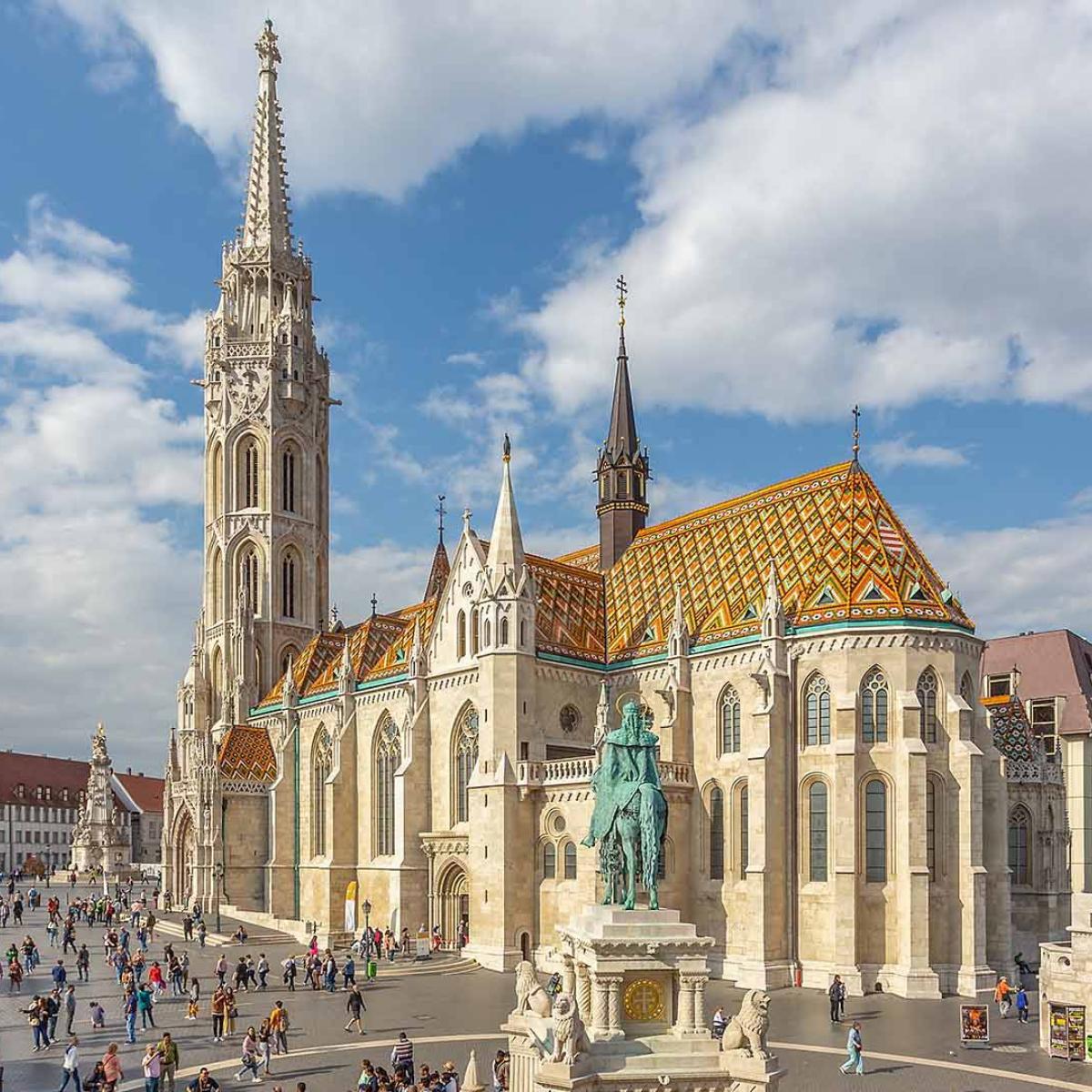
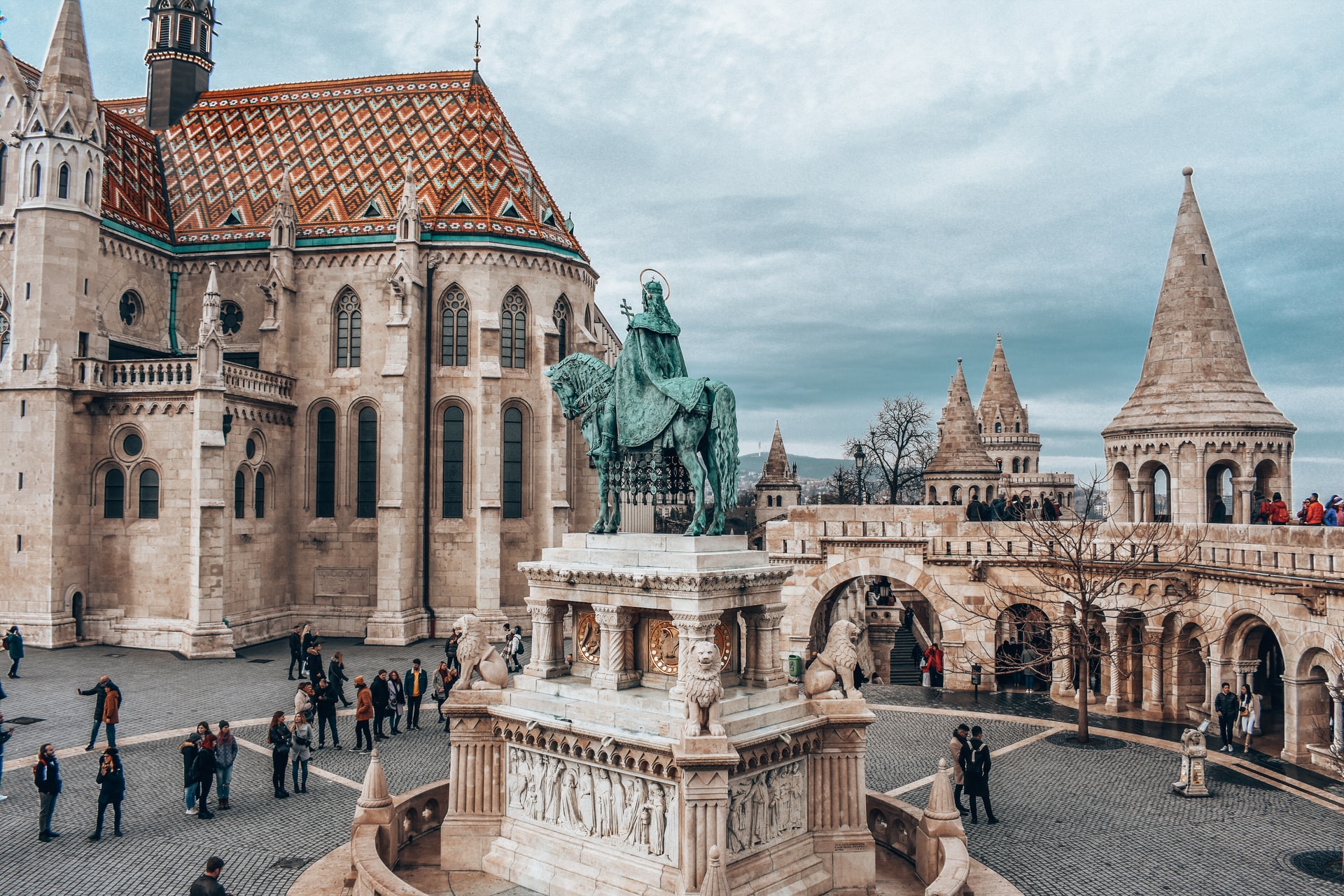
The equestrian statue of St. Stephen, standing at the center of the southern courtyard, completes this historical experience. The reliefs on this work by Alajos Stróbl depict the birth of the Christian Hungarian state, so the architecture of the Fisherman’s Bastion guides visitors through a journey from the conquest of the Carpathian Basin to the founding of the state.
From a Medieval Castle Wall to One of Budapest’s Landmarks
Before it became a romantic lookout point and one of Budapest’s most famous landmarks, this site served for centuries as one of the Buda Castle’s most important lines of defense. The northern castle wall of medieval Buda rose here above the Danube; the steep slope provided natural protection, and the walls blocked access to the castle from the north. The site was also the scene of actual historical events: according to sources, in 1456 László Hunyadi attempted to flee from his pursuers along this section of the castle wall.
During the Ottoman occupation, the castle’s fortifications were reinforced and modernized. When Buda was recaptured in 1686, this section of the wall was also the scene of fierce fighting; it was then rebuilt in the early 18th century according to Baroque fortification principles.
By the second half of the 19th century, due to advances in military technology, the castle walls had lost their military significance, and in 1874, Buda Castle officially ceased to be a military fortress.
At the same time, Hungary was preparing for the 1,000th anniversary of the Hungarian conquest. The millennium was marked not only by celebrations but also by major construction projects such as the Parliament Building, Heroes’ Square, Vajdahunyad Castle, the Liberty Bridge, and the reconstruction of Matthias Church. The Fishermen’s Bastion was also part of this grand era. Construction began in 1895, with the main work taking place between 1899 and 1902, and the complex was completed in 1905.
However, the Fisherman’s Bastion did not remain intact for long. During the siege of World War II, its towers, arcades, and parapets were severely damaged. János Schulek, the son of Frigyes Schulek, also participated in the restoration, so both the building’s creation and its reconstruction are linked to the same family.
Over the decades, the limestone was damaged again by air pollution and the elements, so further restoration work began in the 1980s. The most significant reconstruction took place between 1997 and 2003, when most of the stone carvings were cleaned or replaced, allowing the Fishermen’s Bastion to regain its original, light-colored appearance.
Legends and Interesting Facts
The best-known legend concerns the origin of the name itself. According to tradition, this section of the wall was guarded by the fishermen’s guild during wartime, which is where the name Fishermen’s Bastion comes from. Historians, however, are more cautious and consider it more likely that the name refers to the Halászváros neighborhood lying below it. The two explanations are not mutually exclusive, but neither can be proven with absolute certainty, which is why the origin of the name remains one of Budapest’s most beautiful historical legends to this day.
A remarkable discovery was made during construction. Workers stumbled upon an underground cavity, which they initially thought might be an old casemate. However, excavations soon revealed that the remains of a medieval cemetery chapel, St. Michael’s Chapel, were hidden beneath the ground. Schulek immediately revised his plans so that the chapel could be preserved.
The Fisherman’s Bastion Today
Today, the Fisherman’s Bastion is at once a historic monument, a historical memorial site, and one of Budapest’s most popular attractions. From its terraces, the city reveals a different face at every hour of the day, which is why the panorama has become one of the capital’s most recognizable symbols.
Today, it also hosts cultural events and celebrations. As part of the Buda Castle District, it has been a UNESCO World Heritage Site since 1987, making it part of not only Budapest’s but also the world’s cultural heritage.
Image sources: We Love Budapest, Wikipedia
Facts
Constructed Stories was created by