Cifrapalota
The palace that was considered too “ornate”
Today, the Cifrapalota is one of Kecskemét’s most famous landmarks, but when it was built in the early 20th century, not everyone was a fan. Some thought it was too ornate, too ostentatious, too modern; others would have preferred a hospital or public housing built in its place.
The name “Cifrapalota” originally stuck to the building as a mocking nickname. However, the name proved so apt that the city eventually began referring to it officially by that name. Today, it would be hard to imagine Kecskemét without it.
A city that wanted to show itself off
Kecskemét experienced one of its greatest periods of development at the end of the 19th century. The stabilization of the shifting sands of the Great Plain and the boom in grape and fruit cultivation brought significant prosperity to the city. And the locals wanted to show it off.
More
The city leadership decided to build a modern, representative main street, and thus the plan for the wide Rákóczi út was born, where the most important buildings were designed in the Art Nouveau style, which was considered the most fashionable style of the era.
The City Hall was also built during this period based on Ödön Lechner’s designs, and soon the idea for a new municipal apartment building emerged as well.
According to the story, a local bank made a particularly favorable offer to the city for the plot of land on the corner of the main square. The city councilors then realized that if it was worthwhile for a bank to build an apartment building here, why shouldn’t the city build one of its own? This is how the idea for Kecskemét’s first apartment building was born.
A young architect and one month of design
In 1902, a young, self-taught architect was entrusted with the task. Géza Márkus was given just one month to complete the plans. During the design process, he followed the style of Hungarian Art Nouveau, made famous by Ödön Lechner, but was also influenced by the more modern forms of Viennese Art Nouveau. The end result was at once folk-inspired, playful, and extremely modern.
The building was completed in 1903.
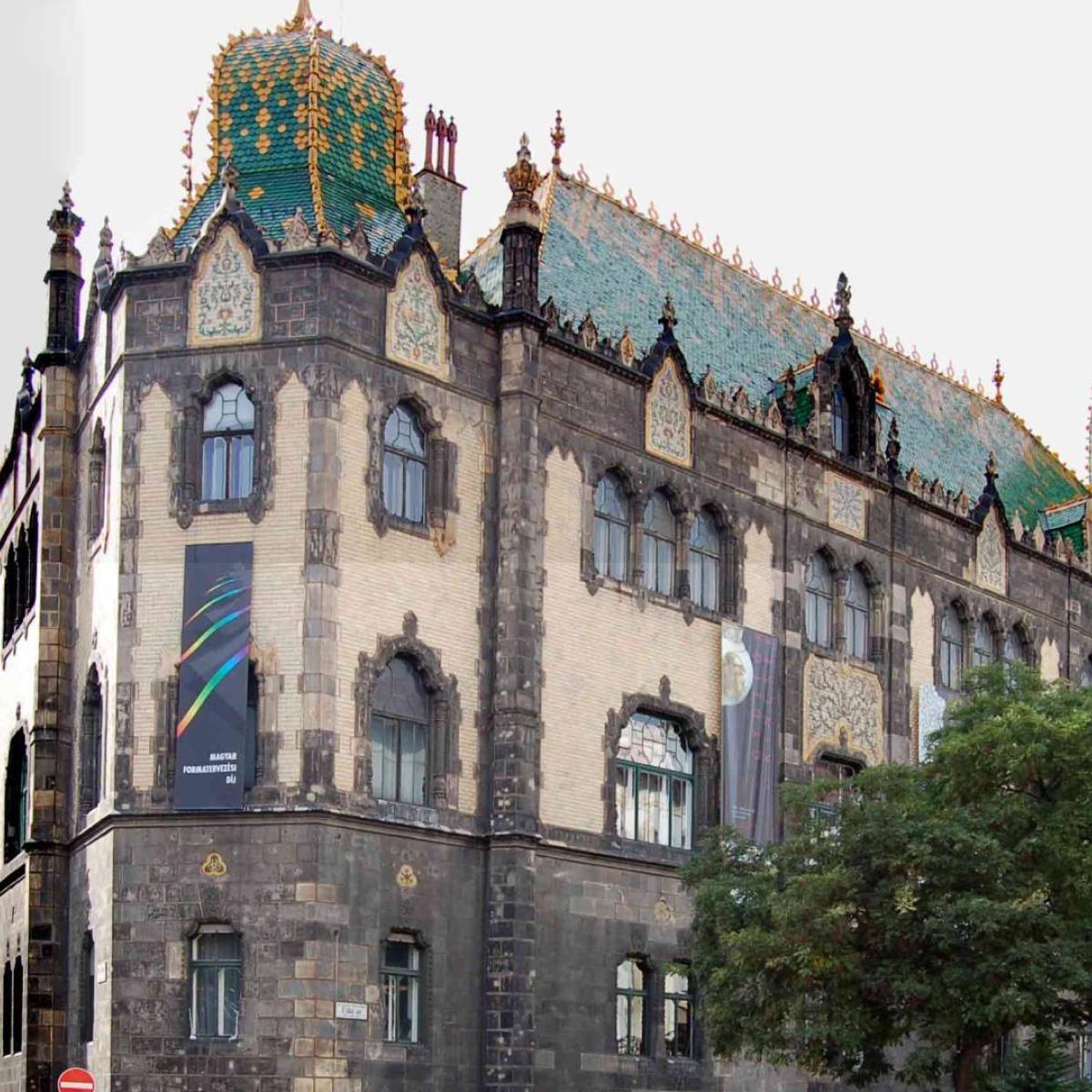
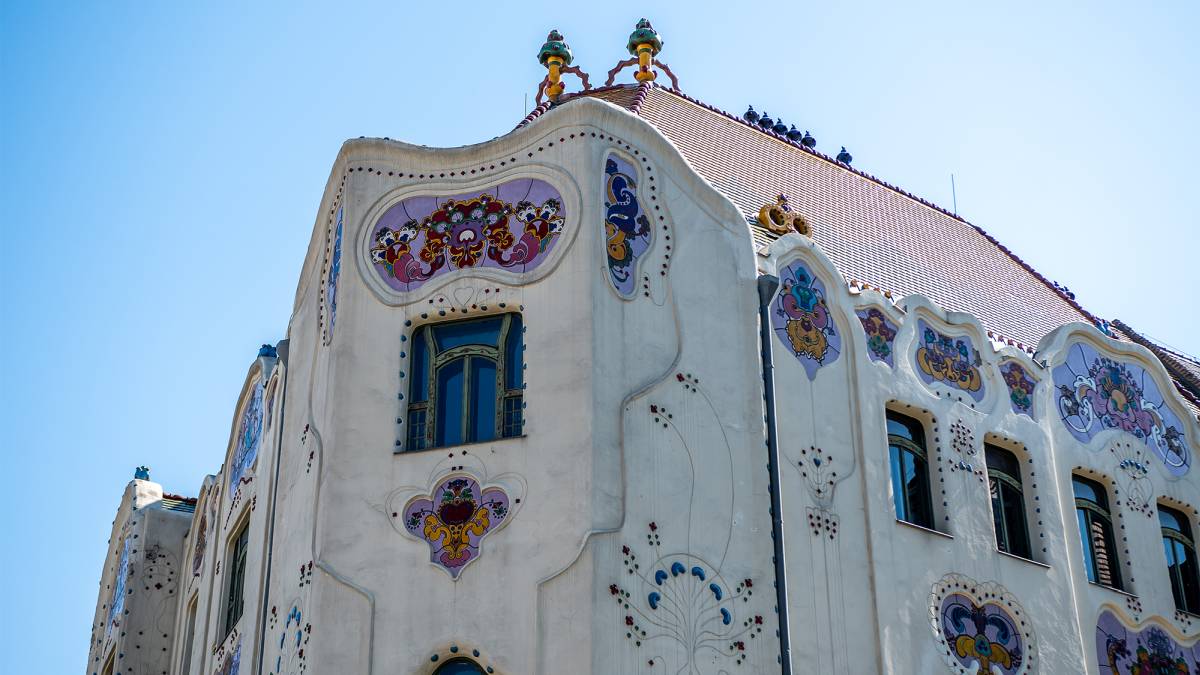
The most distinctive part of the Cifrapalota is its façade. Wavy lines, colorful majolica decorations, folk art motifs, and glazed roof tiles cover the entire house. Many believe that the patterns evoke the embroidery on the ornate aprons of shepherds from the Great Plain.
The decorations were created by the famous Zsolnay Porcelain Manufactory, the same factory that worked on the most beautiful Hungarian Art Nouveau buildings of the era. Thanks to the red, blue, and green pyrogranite elements, the glazed tiles, and the unique ceramic decorations, the building seemed almost fairy-tale-like in the Kecskemét of that time.
Casino, balls, and elegant apartments
The Cifra Palace was not originally built as a museum. Nineteen shops operated on the ground floor, elegant rental apartments were created on the upper floors, and the Commercial Casino was housed on the first floor.
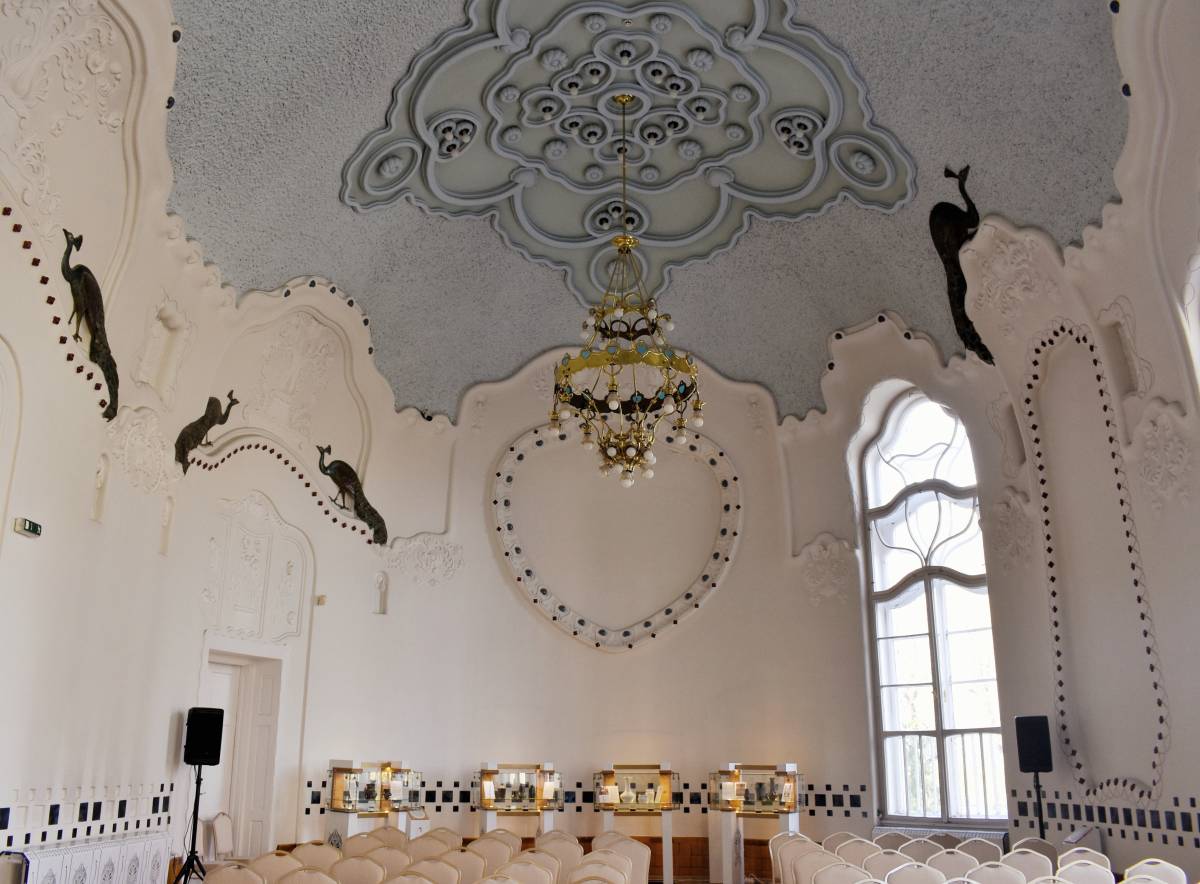
One of the palace’s most unique rooms was the famous Peacock Hall, where balls, social events, and gatherings were held. Colorful peacocks lined the ceiling, and the mirrors made the already spectacular space appear even larger.
The casino also featured a library, a restaurant, a games room, a telephone room, and separate dressing rooms—the latter primarily so that ladies could change or freshen up their dresses during balls.
Not everyone loved it at first
The building, now considered iconic, divided people in its day. Some considered the decoration excessive; others felt it was completely alien to the world of the Great Plain. The undulating facade, the colorful ceramics, and the unusual shapes struck many as almost shockingly modern.
Yet that was precisely what made it special.
With its three facades of equal importance, rounded corners, and thick, snow-white plaster, the U-shaped building resembled a massive sculpture more than a traditional apartment building. The planned corner towers were ultimately not built due to cost-cutting measures, but no corners were cut on the ornamentation.
The Cifra Palace’s New Life: A Museum
After World War II, the building served many different functions: trade unions, offices, and various institutions operated here. Since 1983, however, it has become one of the most important exhibition venues of the Katona József Museum in Kecskemét. Today, it is simultaneously an art, archaeological, and historical center. Among other things, the Cifra Palace houses the gold treasures from the famous Avar princely tomb in Kunbábony, which are among Hungary’s most significant finds from the Avar period.
The art gallery’s collection is of national significance: works by József Rippl-Rónai, Károly Ferenczy, Béla Czóbel, and Menyhért Tóth are on display here.
Since 2002, the Contemporary Christian Iconography Biennial has been held here, and the building also regularly hosts large-scale temporary exhibitions.
One of the most beautiful buildings of Hungarian Art Nouveau
Today, the Cifra Palace is not only a symbol of Kecskemét but also one of the best-known works of Hungarian Art Nouveau. It is at once a fairytale palace, a monument to the city’s history, an arts center, and a symbol of the era when Kecskemét showed the country just how wealthy and self-assured it had become.
And perhaps that is precisely why its name turned out to be so apt, because indeed, this is a true “Cifrapalota.”
Source of images: Kecskeméti Katona József Múzeum, Kecskemét - Környéke.hu, Kecskemét.hu
Facts




Constructed Stories was created by