Duna Arena
Race against time
Few sports facilities in Hungary have been built as quickly or attracted as much international attention as the Duna Arena.
Budapest aquatics center was originally intended for the 2021 World Championships, but the project took a completely new turn when Budapest secured the right to host the 2017 FINA World Aquatics Championships in 2015. From that point on, the stadium’s construction became not only a priority sports investment but also a race against time.
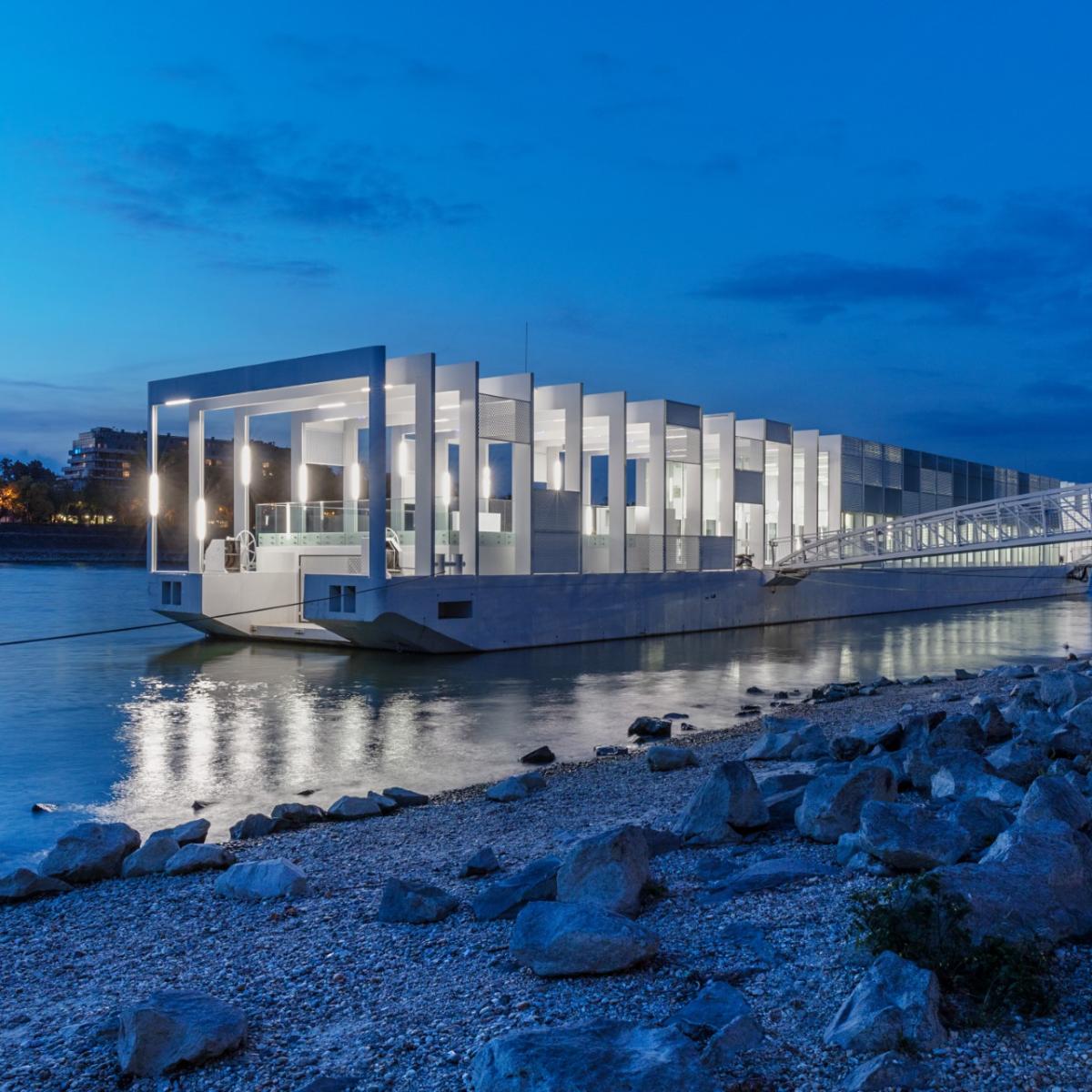
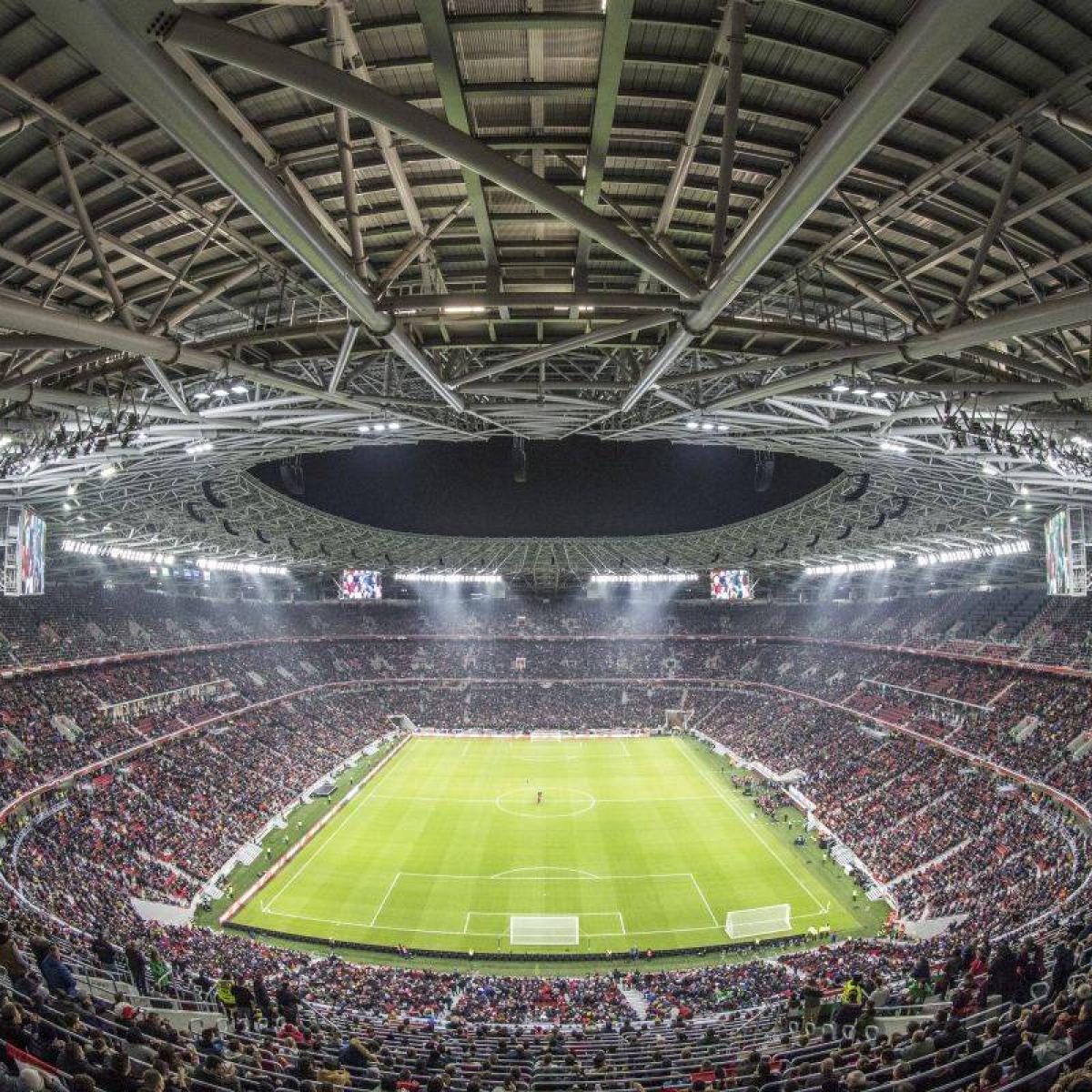
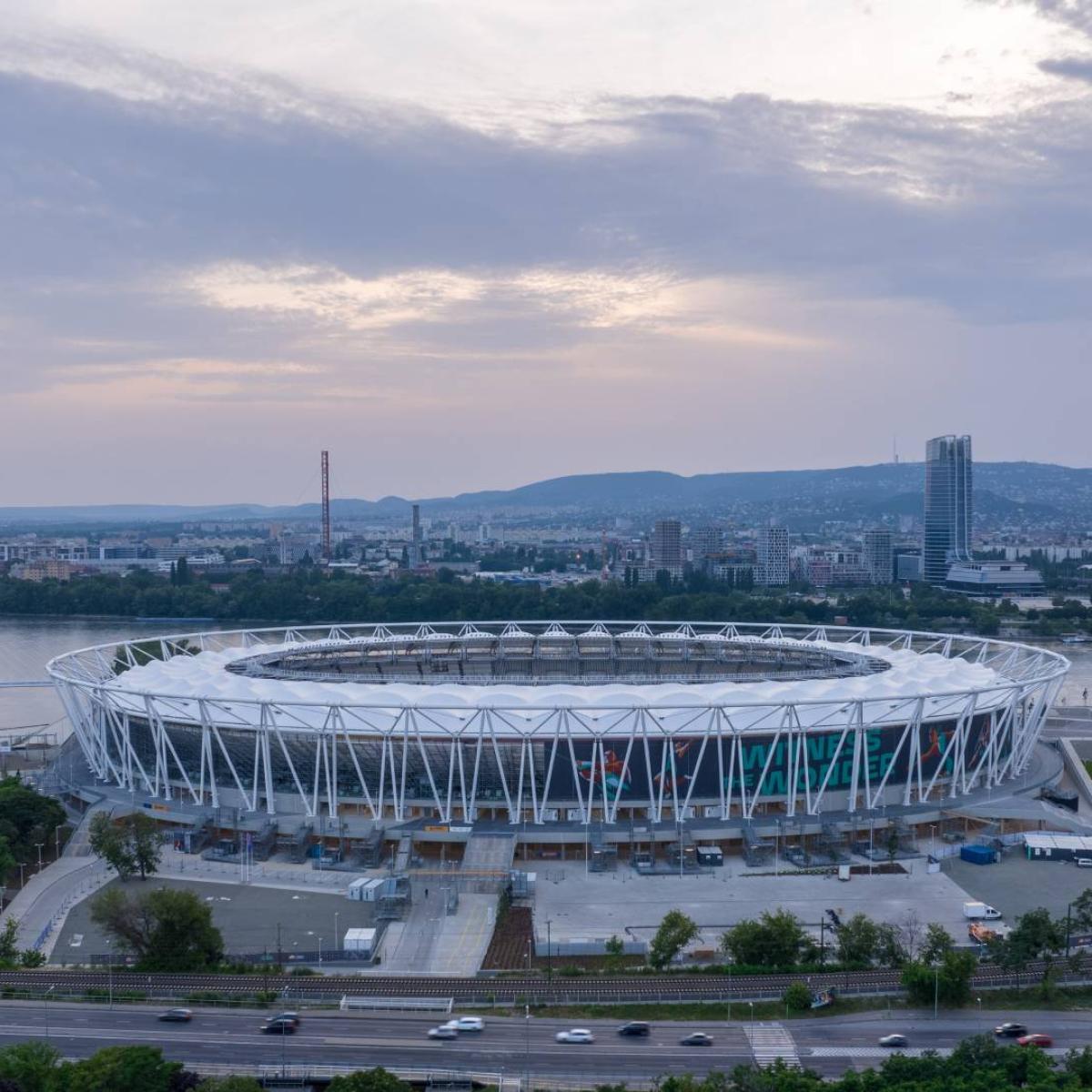
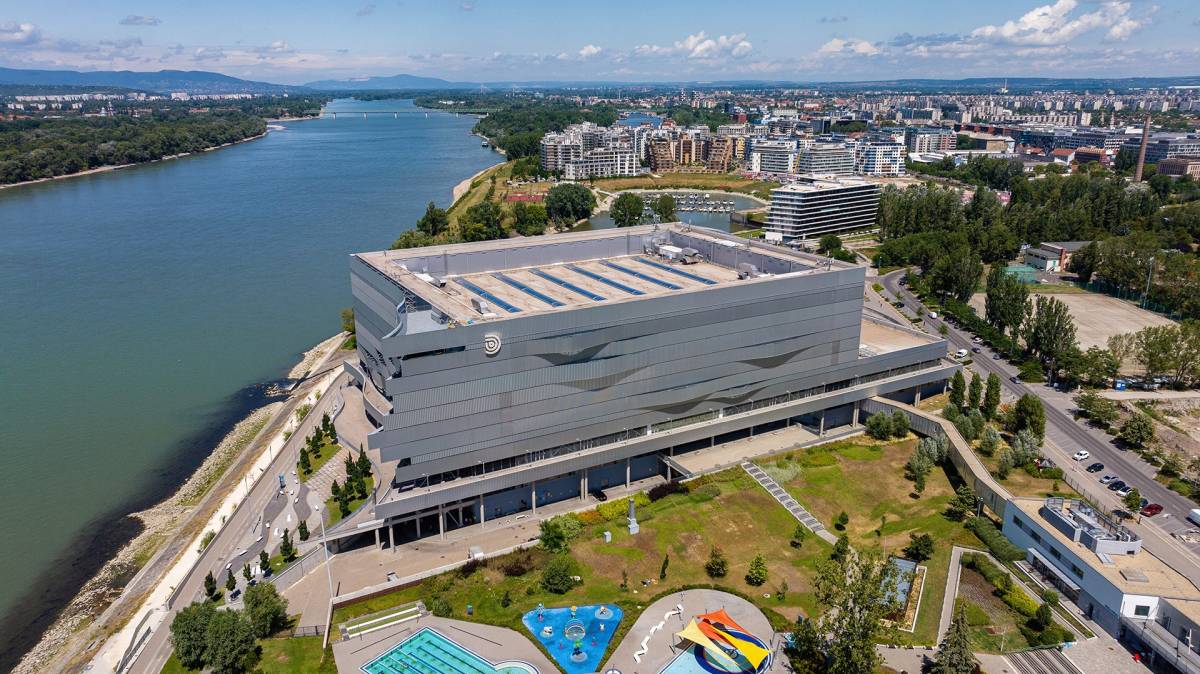
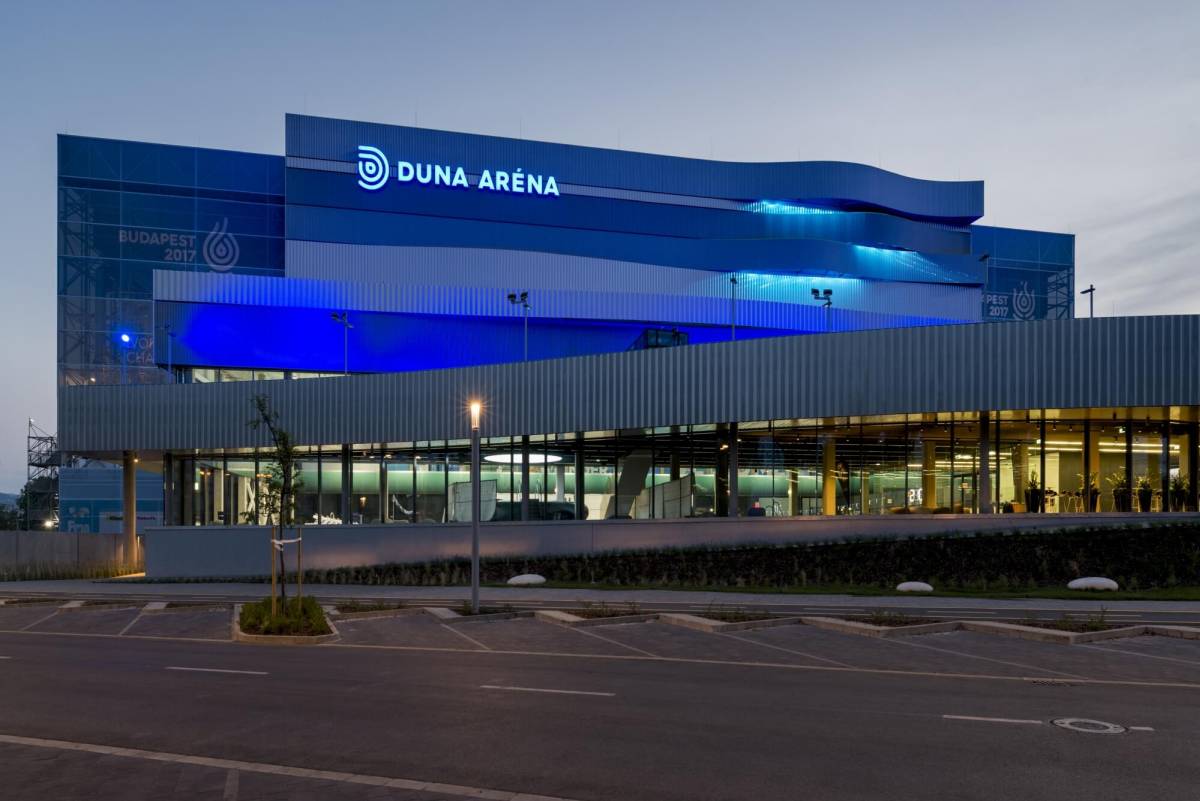
The arena, built on the banks of the Danube near Angyalföld and Margaret Island, was ultimately completed in record time and became one of the most important venues of the 2017 World Championships. During the championships, it could accommodate nearly 15,000 spectators, and in its final form, it continues to operate with a capacity of 6,000.
However, the Duna Arena became more than just a new competition pool. The project also transformed the surrounding urban environment: the adjacent public spaces, pedestrian connections, and transportation infrastructure were renovated, making the building a defining feature of Budapest’s Danube waterfront.
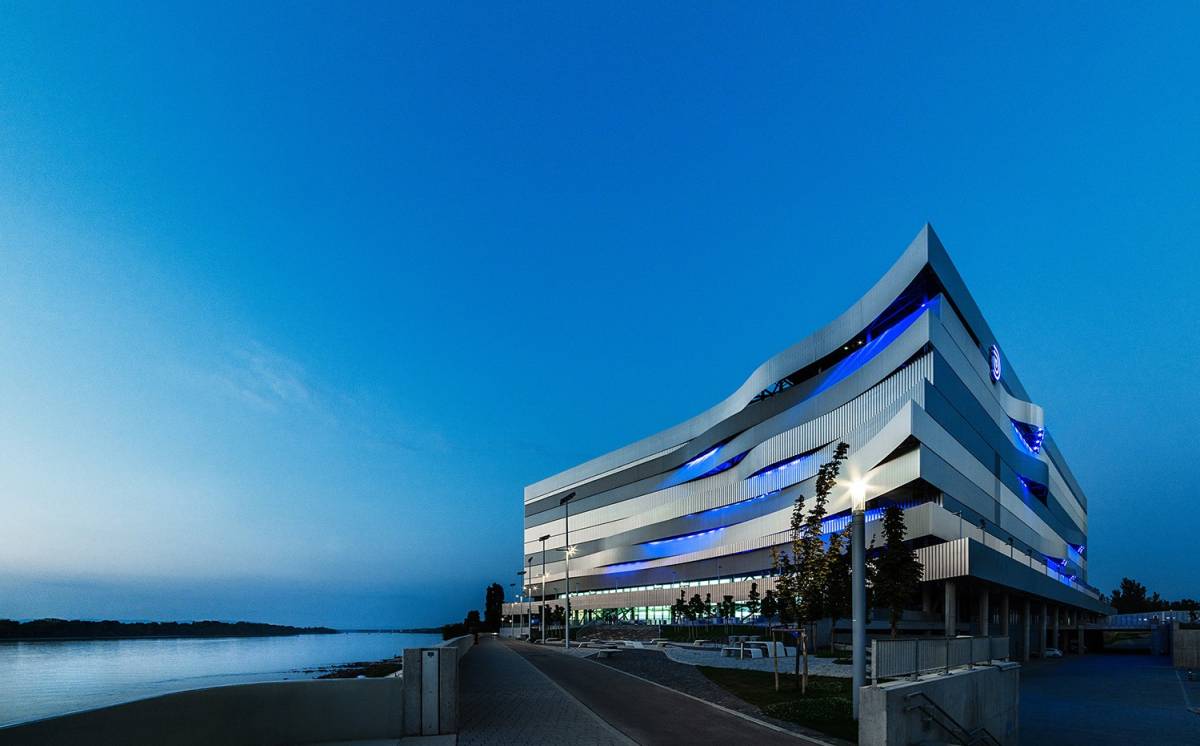
Behind the undulating facade
The architectural concept for the Duna Arena was designed by Marcel Ferencz and György Détári.
More
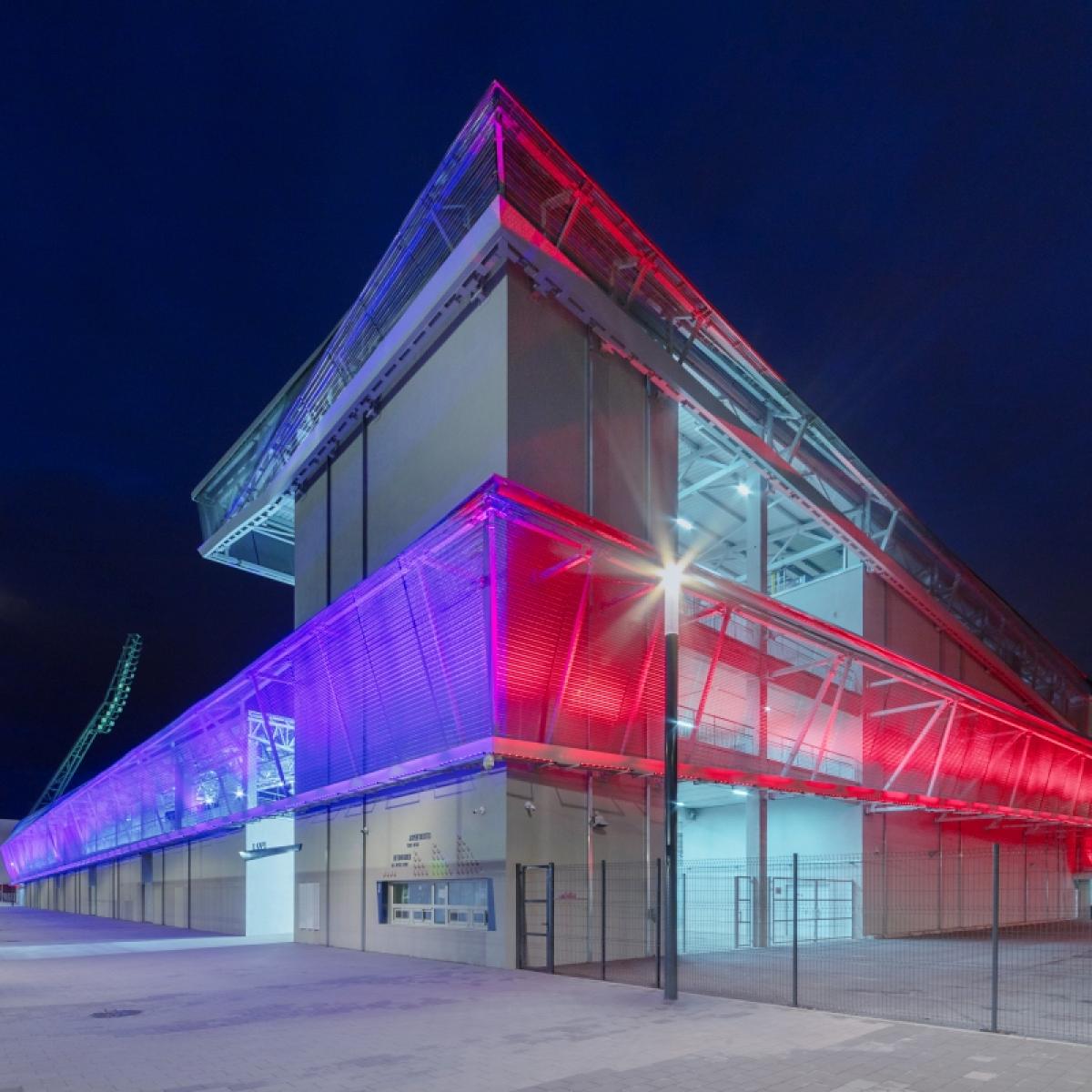
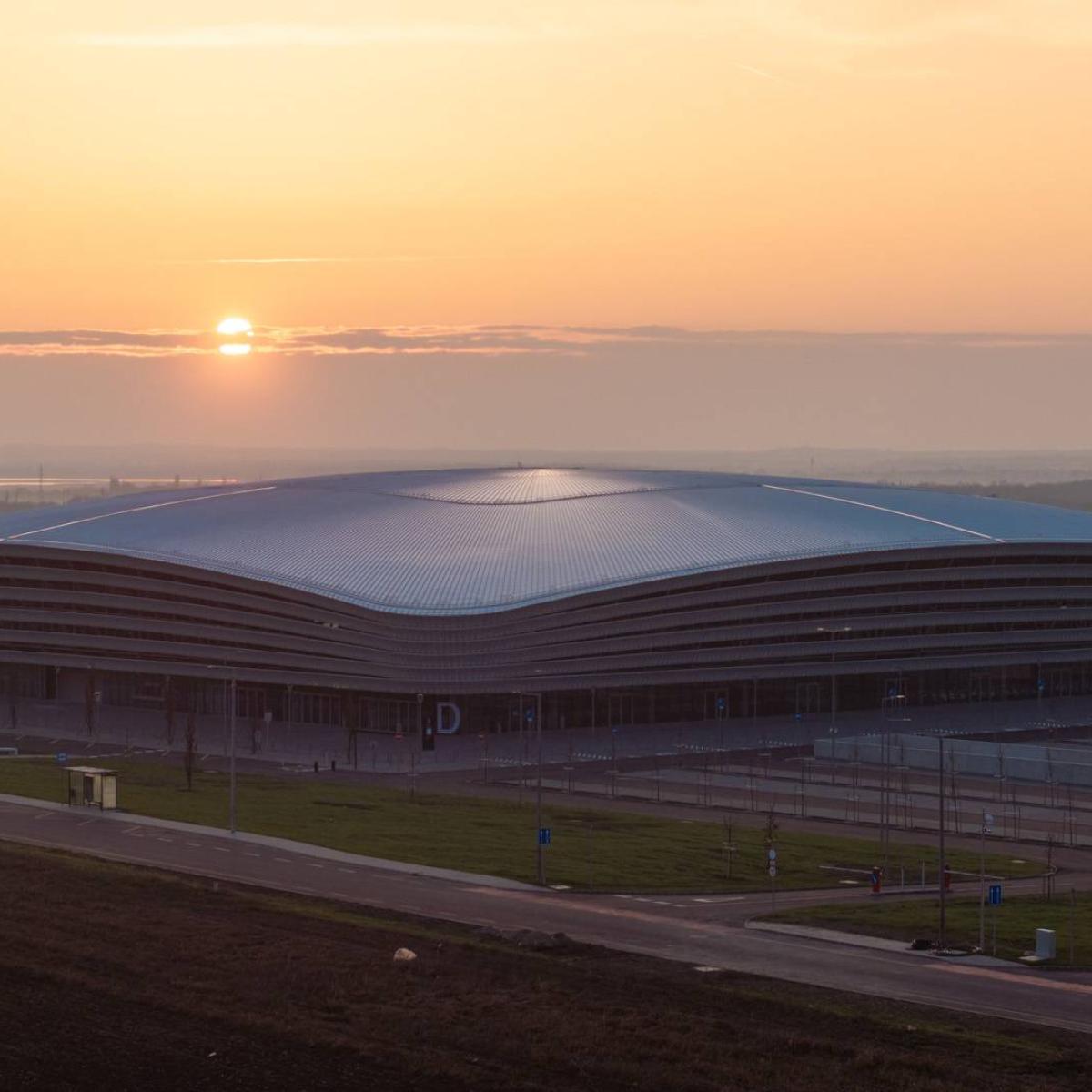
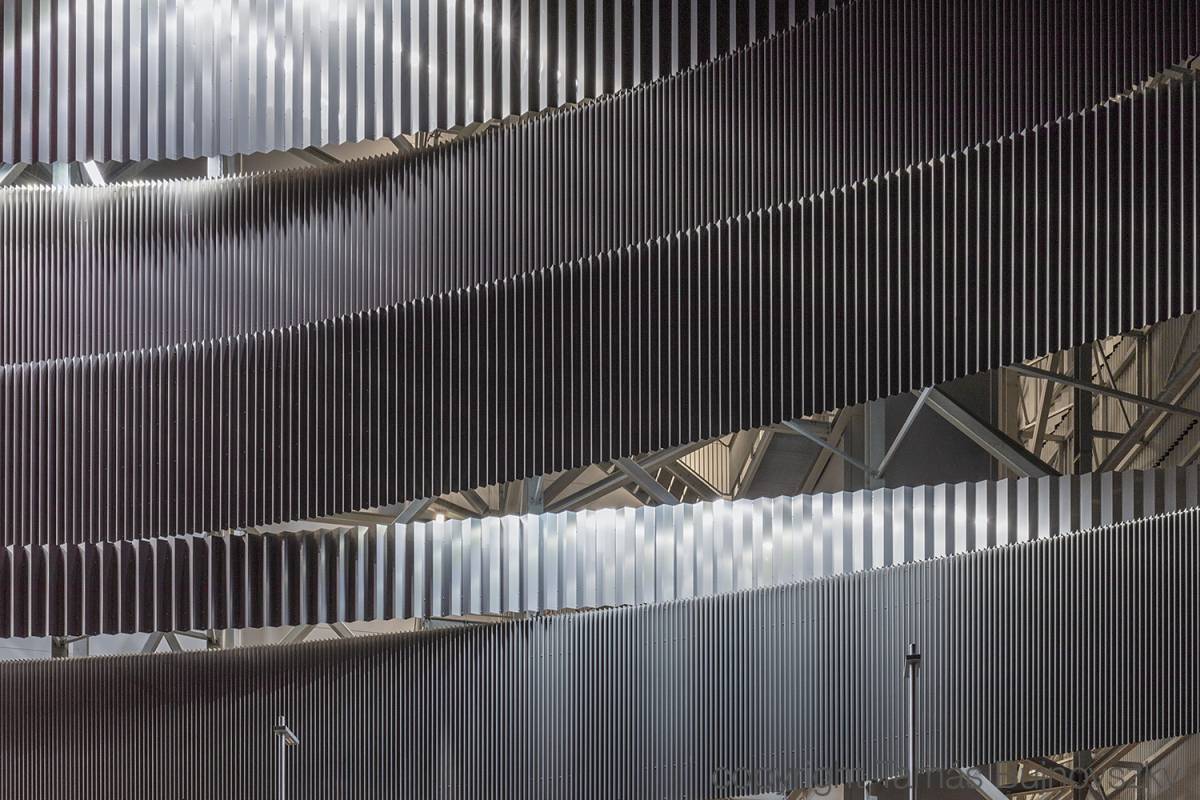
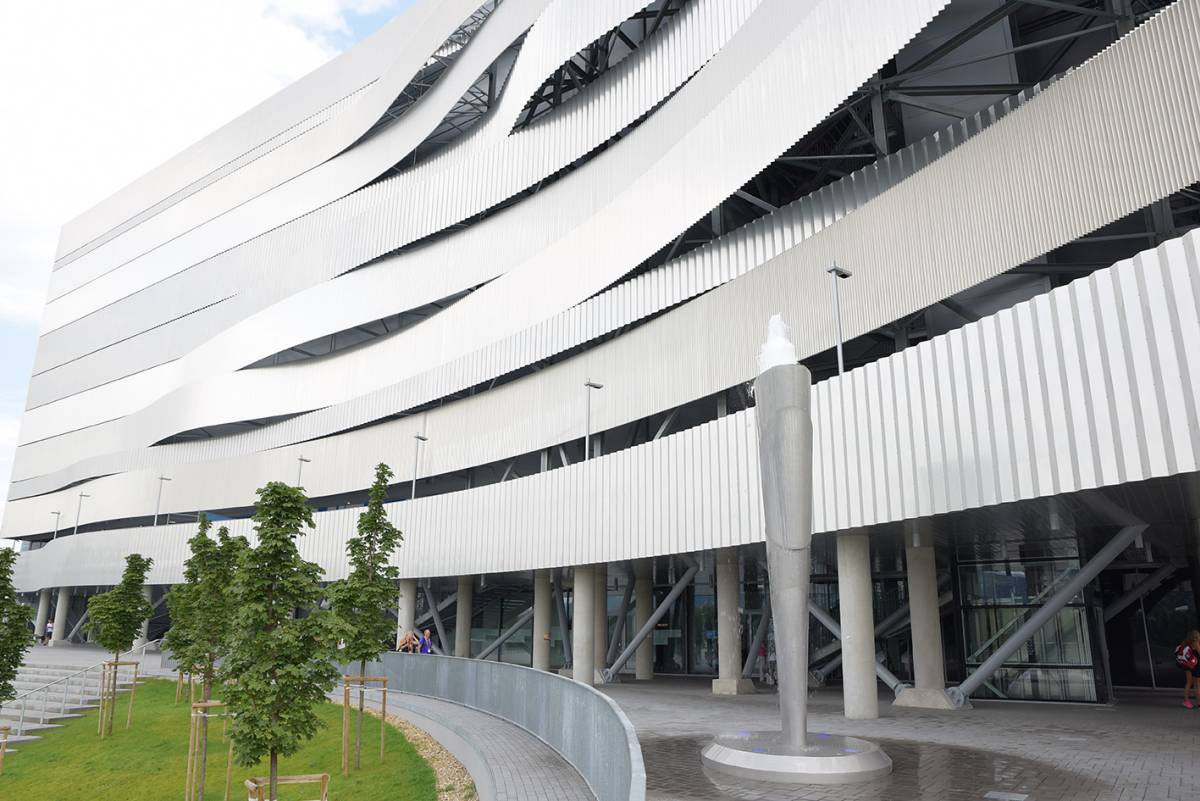
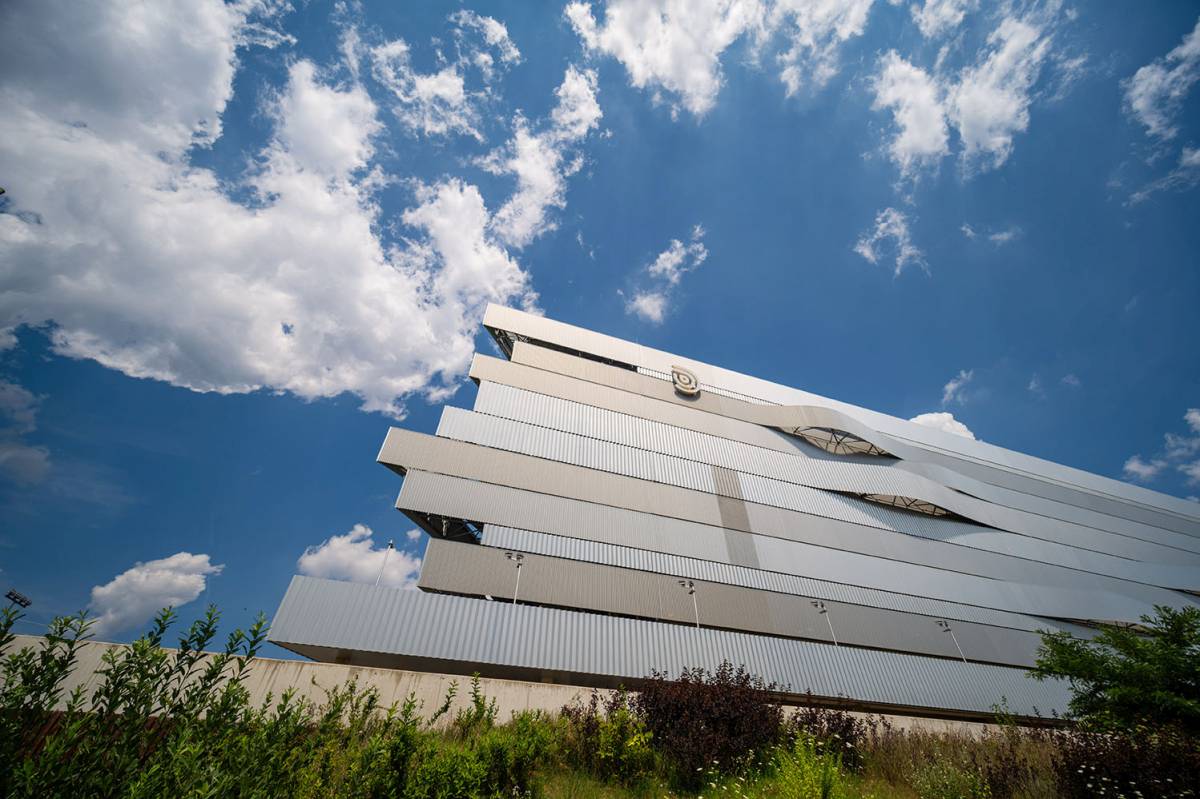
The building’s design deliberately evokes the movement of water: the undulating, light facade gives the arena a look that is both dynamic and elegant. Behind the spectacular exterior, however, lies an extremely complex engineering and functional system designed to meet the strict requirements of international swimming and water polo competitions.
The cornerstone was laid in May 2015, and technical handover took place as early as February 2017. The Duna Arena thus became one of the world’s fastest-completed international sports projects of this scale.
2,400 tons of steel and a special lift
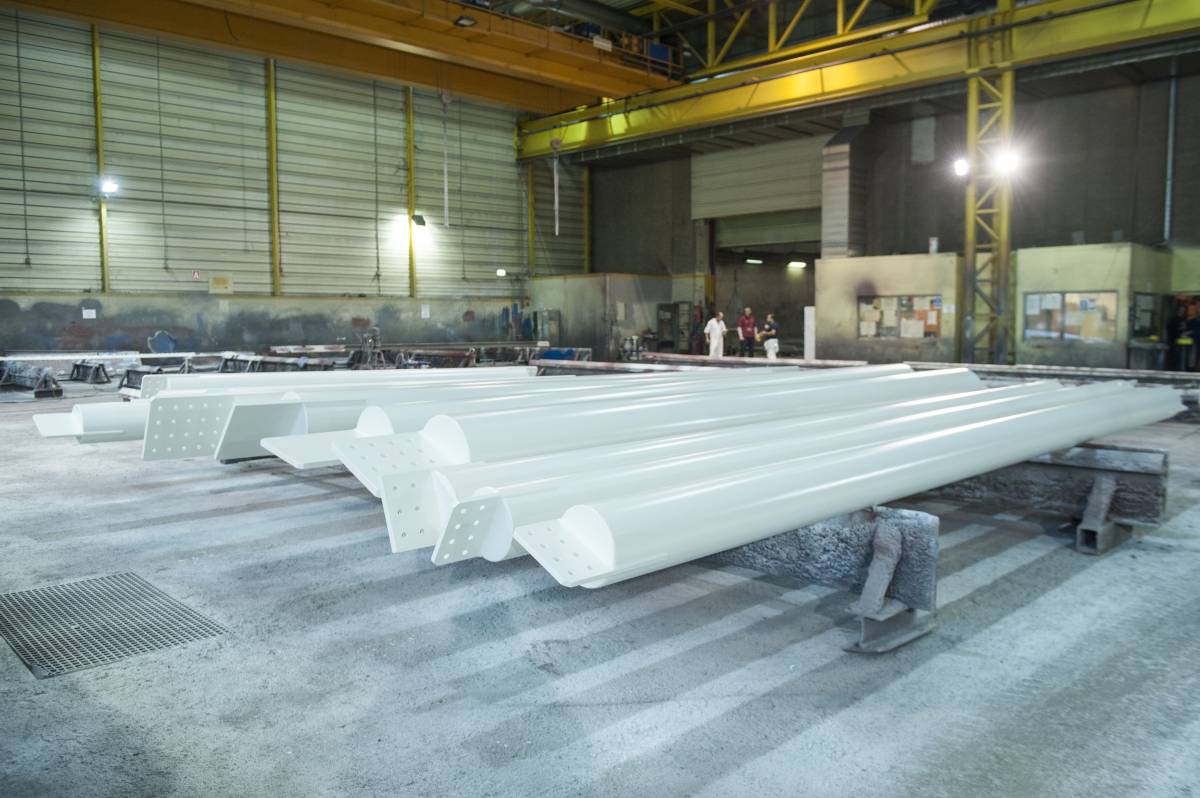
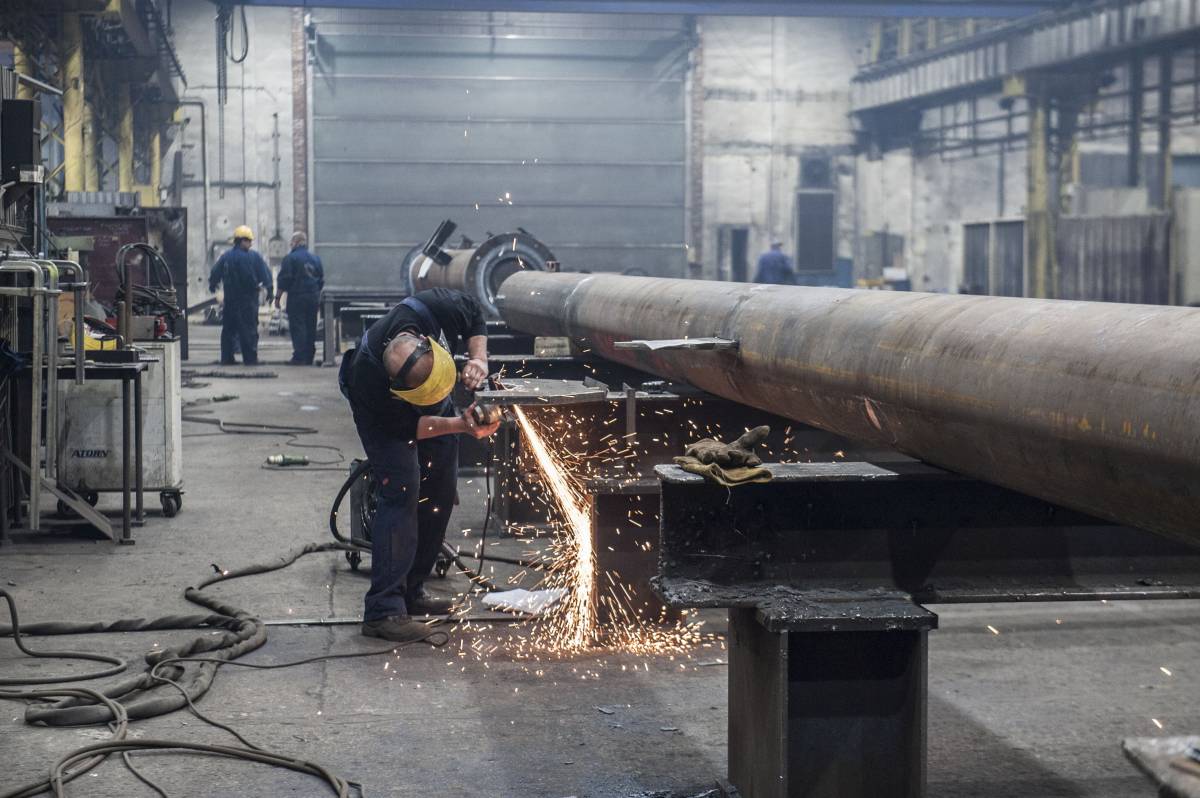
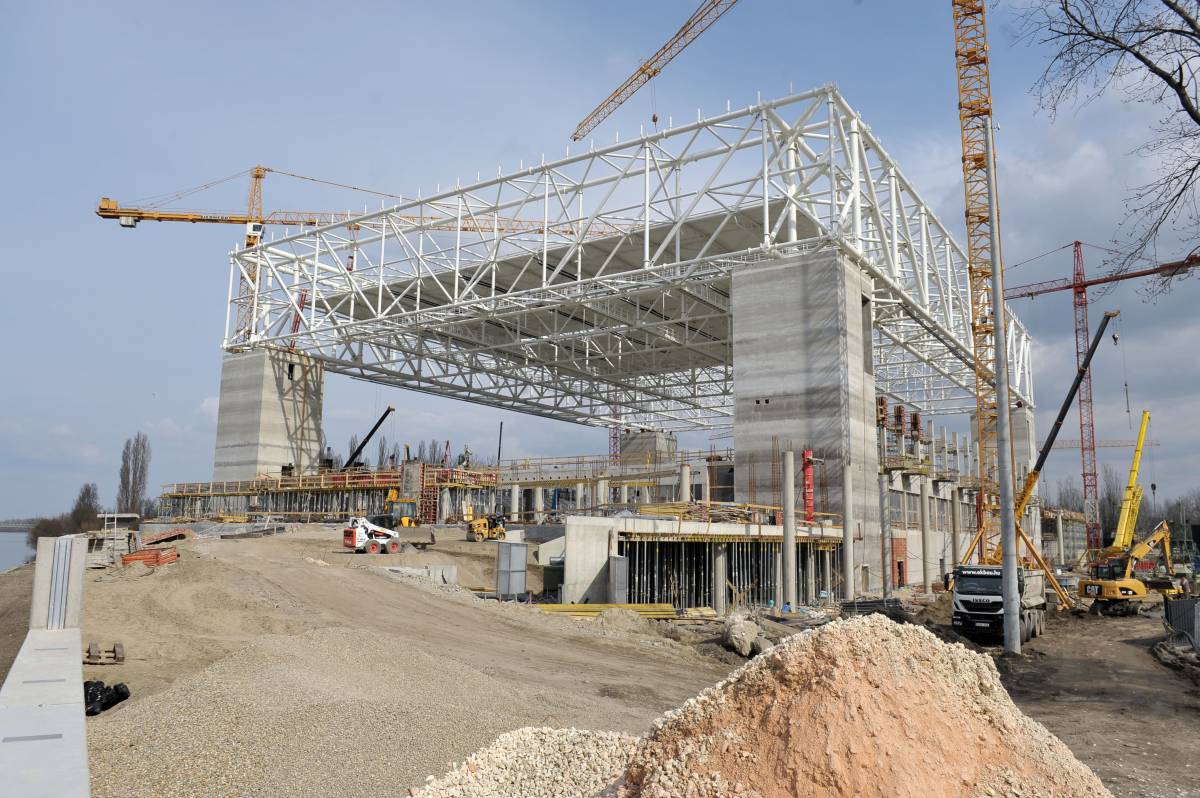
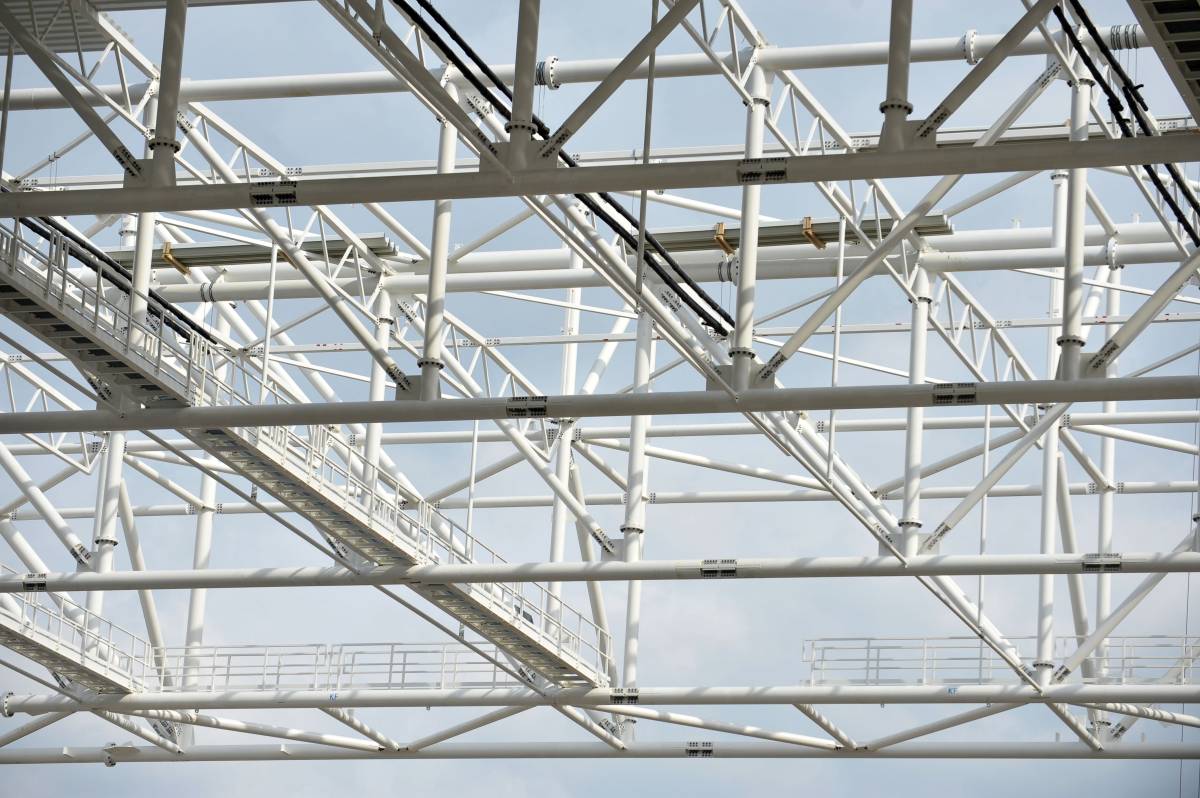
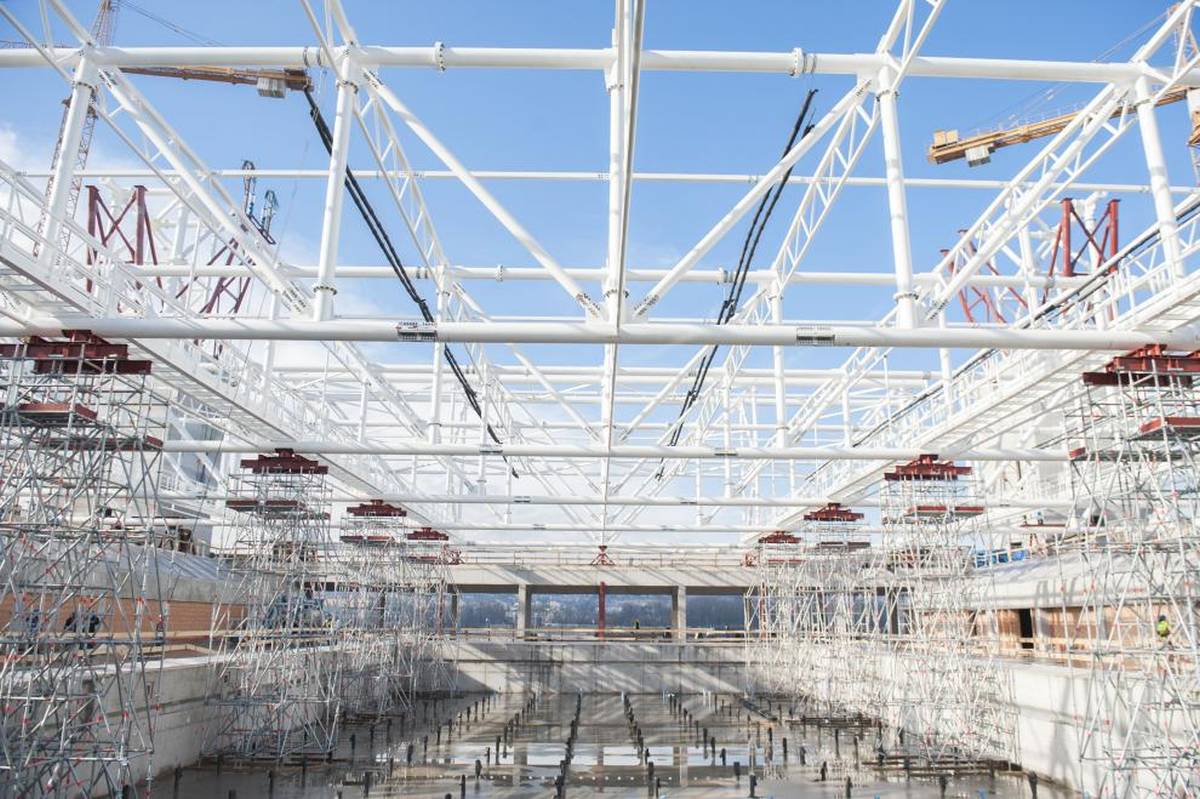
One of the project’s greatest technical challenges was the arena’s steel structure, the design, manufacturing, and on-site assembly of which were carried out by KÉSZ Group, while KÉSZ Ipari Gyártó Kft. performed the specialized steel construction work.
What makes the stadium unique is that the approximately 2,400-ton steel structure was not built at its final location. The entire structure was transported to the site by more than 300 trucks, after which it was first assembled on the ground and then lifted into place as a single unit using a special engineering solution.
The hoisting operation took only 6 hours, during which the structure was lifted from a height of 44 meters to its final position at 17 meters - a technological solution considered unique in Hungary.
The project’s professional quality has been recognized with several awards: the Duna Arena won the Tierney Clark Award, as well as the Steel Structure Quality Award.
The new center for water sports
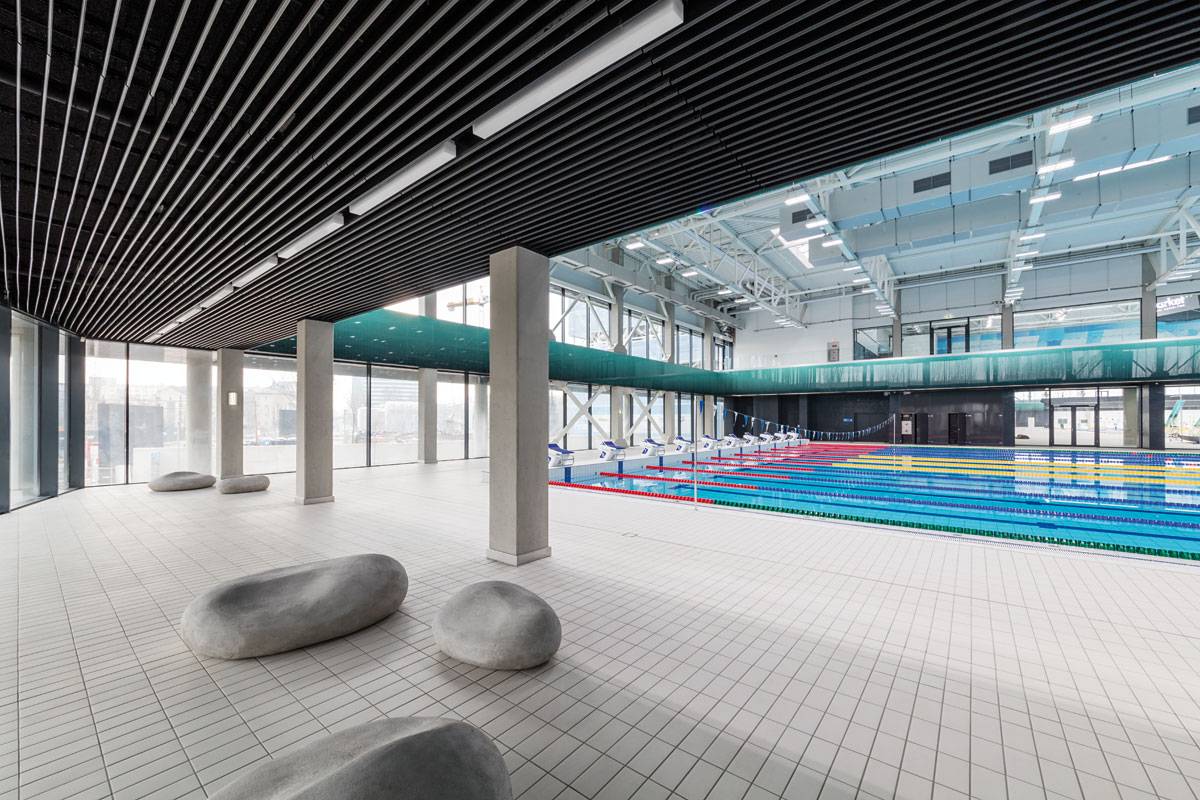
Even after the World Championships, the Duna Arena has remained a key player in domestic and international sports. In recent years, it has hosted World Swimming Championships, European Championships, water polo events, and youth competitions, while also becoming one of the most important training centers for Hungarian swimming and water polo.
The complex serves elite sports, youth development, and everyday recreation simultaneously. The arena is also open to the general public, so the venue for world-class events has remained a vibrant part of Budapest’s sports life even on weekdays.
The Duna Arena is therefore now much more than just a swimming pool built for a world championship. It is a feat of contemporary architecture and engineering that will play a defining role in Budapest’s urban and sports infrastructure for years to come.
Source of images: KÉSZ Group, NSÜ Nemzeti Sportügynökség Nzrt.
Facts

Constructed Stories was created by